


Abu Dhabi’s luxury property market is entering a period in which investors increasingly need to distinguish between merely expensive projects and projects whose locations, product quality and long-term scarcity may justify premium pricing.
Sei Saadiyat by Aldar belongs firmly in that conversation.
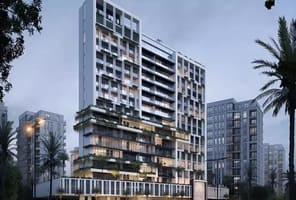
Launched in September 2026 within Saadiyat Cultural District, Sei Saadiyat is a six-building residential development comprising 778 homes, with prices currently starting from AED 2.95 million, a 5% down payment, a 50/50 payment plan and estimated completion in Q4 2030. The first phase introduces 265 residences across two buildings, with sales scheduled to begin on 16 September 2026.
Those specifications make the project interesting.
They do not, by themselves, make it a good investment.
A serious property investor should ask a different set of questions.
Is the location genuinely difficult to replicate? Is demand for premium Saadiyat property supported by transaction evidence rather than marketing? Is the entry price reasonable relative to the wider premium market? Does the payment structure help or merely postpone a large financial commitment? Which unit types are most defensible on resale? And what could go wrong between 2026 and the expected handover in 2030?
This guide examines those questions in detail.
Quick answer: Sei Saadiyat has several characteristics that support a credible long-term investment case: a location inside Saadiyat Cultural District, development by Aldar, limited prime-island land, strong current Saadiyat transaction activity, differentiated residences and a construction timeline that coincides with further maturation of the Cultural District. However, investors should not assume automatic capital appreciation. The acquisition price, exact unit, view, floor, service charges, future supply and exit strategy will determine whether an individual purchase performs well.
The Sei Saadiyat Investment Thesis
The investment case for Sei Saadiyat can be reduced to one central proposition:
An investor is buying into the future value of a scarce residential location inside an internationally recognised cultural district—not simply buying an apartment in Abu Dhabi.
That distinction matters.
There are many places in Abu Dhabi where additional residential buildings can be constructed. Some locations can continue expanding horizontally, while others contain large pipelines of relatively interchangeable apartment stock.
Saadiyat Cultural District is different.
Its value proposition is closely connected to major cultural institutions, waterfront surroundings, carefully planned public realm, landmark architecture and Saadiyat Island’s position at the luxury end of Abu Dhabi’s housing market.
Sei Saadiyat therefore does not need to become the cheapest property option.
Its investment case depends on remaining one of the more desirable ones.
That means investors should assess it in terms of scarcity, quality and destination maturity rather than comparing it exclusively with lower-cost communities on an AED-per-bedroom basis.
1. Location Is the Strongest Part of the Investment Case
Real estate ultimately begins with location.
Sei Saadiyat sits directly within Saadiyat Cultural District, placing residents close to a concentration of institutions that is difficult to reproduce elsewhere in the emirate.
The district includes Louvre Abu Dhabi, Zayed National Museum, Natural History Museum Abu Dhabi, teamLab Phenomena Abu Dhabi and the Abrahamic Family House. Guggenheim Abu Dhabi is also becoming part of this cultural landscape, with Saadiyat’s official destination platform currently showing an opening date of 11 December 2026.
This matters for real estate because major cultural infrastructure changes a location's identity.
A conventional residential district may primarily compete through apartment size, facilities and price.
A globally recognisable cultural district competes through something broader: place.
Residents can live beside institutions that attract international visitors, events, exhibitions, hospitality investment, restaurants, premium retail and wider government attention.
That creates a form of locational differentiation that cannot easily be reproduced simply by constructing another luxury tower elsewhere.
For long-term investors, this is arguably Sei Saadiyat’s most defensible characteristic.
2. Saadiyat Is Already a Premium Market—Not Merely a Future Promise
One reason investors should take Sei Saadiyat seriously is that Saadiyat Island does not need to establish itself from zero.
Transaction data already shows significant capital flowing into the island.
According to the Abu Dhabi Real Estate Centre’s H1 2026 market report, Saadiyat Island recorded approximately AED 13.3 billion in residential sales during the first six months of 2026. It ranked behind Hudayriyat but ahead of several other major investment districts by residential sales value.
This matters because there is a major difference between investing in a masterplan that buyers hope will eventually attract demand and investing in a district where substantial demand already exists.
Independent research also confirms Saadiyat’s premium positioning.
Knight Frank reported that as of June 2026, Al Saadiyat Island remained Abu Dhabi’s most premium apartment location, with average transaction pricing around AED 43,100 per square metre, up approximately 21% year-on-year.
That does not mean Sei Saadiyat will reproduce those gains.
Nor does it mean every apartment on Saadiyat trades at the island average.
But it provides useful context.
An investor buying Sei Saadiyat is entering a market already recognised as Abu Dhabi’s highest-priced apartment location rather than speculating that the area might one day become premium.
3. Abu Dhabi’s Off-Plan Market Is Exceptionally Active
Sei Saadiyat is also launching into a period of unusually strong off-plan activity.
ADREC reported approximately AED 70.4 billion in residential sales during H1 2026, compared with AED 25.3 billion in H1 2025.
More importantly for Sei Saadiyat buyers, off-plan transactions represented 89% of residential sales value and 82% of residential deals during the period.
That provides a favourable launch environment.
It demonstrates substantial buyer willingness to commit capital to properties under construction rather than limiting activity to completed units.
But investors should understand what this data does and does not tell them.
It tells us that market liquidity and confidence have been strong.
It does not tell us that off-plan prices can rise indefinitely.
An investor entering after a period of significant market appreciation should be more selective, not less selective.
When sentiment is strong, weak units can sometimes sell simply because the wider market is rising.
The true quality of a purchase often becomes clearer when the market normalises.
For Sei Saadiyat, that means unit selection matters.
4. Aldar Reduces One Category of Risk
Developer selection is one of the most important decisions in an off-plan purchase.
Sei Saadiyat is being developed by Aldar, which gives the project immediate recognition in Abu Dhabi’s property market.
For an investor, this matters primarily because off-plan ownership introduces execution risk.
The buyer is purchasing something that does not yet physically exist in its completed form.
Architecture, construction quality, delivery management, community operations and eventual building reputation all influence the finished asset.
A major developer does not remove those risks completely.
It can, however, change their profile.
Aldar’s existing footprint across Abu Dhabi gives investors previous communities and completed projects against which to assess its development approach rather than relying solely on promises attached to a new entrant.
In the premium segment, brand recognition can also matter at resale.
A future purchaser comparing two similar properties may attach value not merely to location and size but to the developer associated with the project.
5. The Project Is Large Enough to Create a Community but Not Unlimited in Scale
The completed Sei Saadiyat development is planned to contain:
| Detail | Sei Saadiyat |
|---|---|
| Residential buildings | 6 |
| Total homes | 778 |
| First-phase homes | 265 |
| First-phase buildings | 2 |
| Expected completion | Q4 2030 |
| Entry price | From AED 2.95M |
| Payment structure | 50/50 |
| Initial payment | 5% |
Official details:
Seven hundred and seventy-eight homes is not a tiny boutique project.
But neither is it an enormous multi-thousand-unit apartment district.
That balance may work in its favour.
A development needs enough residents to support amenities, community services and commercial activity, but excessive identical supply can make resale competition difficult.
The more interchangeable units a project contains, the easier it becomes for a seller to find themselves competing directly with multiple owners of almost identical homes.
Sei Saadiyat’s unit differentiation—particularly through Kanso Residences and Kanso Lofts—may help reduce that issue for certain layouts.
6. The Kanso Product Could Matter More Than Many Investors Realise
One of the strongest features of Sei Saadiyat is that Aldar has not limited the development to conventional apartments.
The collection includes:
1 and 2-bedroom apartments, 3-bedroom Kanso Residences and 2-bedroom Kanso Lofts, with selected residences offering maid’s-room options. Average published sizes run from approximately 70 sqm to 208 sqm.
The Kanso Lofts are particularly interesting.
They introduce a double-height, loft-style residential format rather than simply another standard two-bedroom floor plan.
This matters because scarcity can exist within a project as well as within a location.
Imagine the project in 2031.
If dozens of conventional two-bedroom apartments are listed simultaneously, buyers can compare them largely on price, floor and view.
A distinctive double-height residence may have fewer direct substitutes.
That does not mean a Kanso Loft is automatically the best investment.
A premium paid at launch can eliminate the benefit of future scarcity if the acquisition price is too high.
But the product deserves close consideration from buyers whose strategy prioritises resale differentiation rather than lowest initial entry price.
7. Architecture and Design Are Part of the Investment Case
In commodity housing, architecture may have limited impact on returns.
At the premium end of the market, it matters more.
Aldar has appointed Jacobs for the architecture of Sei Saadiyat, with the six towers designed around light, spatial proportion and open views. Interiors are being developed by Kettle Collective, using natural materials and a subdued design philosophy.
This aligns with the project’s broader wellness concept.
The reason investors should care is not merely aesthetic.
Buildings age in two ways.
They age physically, through use and maintenance.
And they age stylistically.
Some developments look dated within a decade because the architecture followed a short-lived visual trend.
Others retain appeal because the design is quieter and more timeless.
It is impossible to know precisely how buyers will perceive Sei Saadiyat in 2040.
But restraint, quality materials and well-considered proportions generally provide a better foundation for long-term premium positioning than highly theatrical design that depends on novelty.
8. Wellness Is Not Just Marketing If It Changes Daily Use
Many property developments now use the word “wellness.”
That makes the term easy to dismiss.
The more relevant question is whether the concept materially changes how residents use the property.
At Sei Saadiyat, Aldar has organised amenities around Breathe, Move, Restore and Connect, incorporating landscaped gardens, hot and cold bathing, fitness facilities and spaces designed for rest, movement and social connection. The project also targets Estidama Pearl 3, with smart-community features and EV provisions.
From an investment perspective, amenities have two sides.
On one side, they can improve desirability, tenant retention and end-user demand.
On the other, expensive amenities can translate into higher operating and service costs.
The correct investment question is therefore not:
“Does the project have many amenities?”
It is:
“Will residents value these facilities sufficiently to support the price and service-charge structure?”
Until final service-charge estimates are available, buyers should keep that question open.
9. The AED 2.95 Million Starting Price Requires the Right Perspective
Sei Saadiyat currently starts from AED 2.95 million.
That immediately positions the development away from mass-market affordability.
An investor should not compare this entry point with a lower-priced one-bedroom apartment in a completely different Abu Dhabi district and conclude that Sei Saadiyat is simply “expensive.”
Different assets serve different investment strategies.
A lower-cost apartment may generate a stronger percentage rental yield.
A premium Saadiyat residence may instead derive a larger part of its investment case from asset scarcity, international buyer appeal, capital preservation and long-term location appreciation.
Neither strategy is inherently superior.
The mistake is buying one while expecting the economics of the other.
A Sei Saadiyat buyer who expects the highest gross rental yield in Abu Dhabi may be using the wrong benchmark.
A buyer seeking exposure to a prime cultural and lifestyle district may view the same pricing differently.
10. The 50/50 Payment Plan Changes Capital Timing
Aldar currently offers a 50/50 payment structure with 5% down.
At the AED 2.95 million starting level, a simplified illustration looks like this:
| Stage | Percentage | Illustrative Amount |
|---|---|---|
| Initial down payment | 5% | AED 147,500 |
| Remaining pre-handover payments | 45% | AED 1,327,500 |
| Handover balance | 50% | AED 1,475,000 |
| Total | 100% | AED 2,950,000 |
This is an illustration of the broad structure rather than the contractual instalment schedule.
The payment plan has a genuine investment advantage: capital is deployed progressively rather than entirely on day one.
That can improve liquidity management.
But investors should not fall into a common psychological trap.
A small initial payment can make a property feel cheaper than it actually is.
The investor is committing to the entire AED 2.95 million-plus acquisition, not merely the initial AED 147,500.
The 50% balance at handover is particularly important.
Before reserving, a purchaser should already know whether that amount is expected to come from cash, another asset sale, income, refinancing or mortgage funding.
A payment plan is a cash-flow structure.
It is not a substitute for a capital plan.
11. The 2030 Handover Can Work in the Buyer’s Favour
Sei Saadiyat is scheduled for estimated completion in Q4 2030.
Four years is a meaningful horizon.
For buyers seeking immediate rent, it is a disadvantage.
For investors focused on destination maturation, it could be an advantage.
Between launch in 2026 and completion, Saadiyat Cultural District will continue evolving.
The crucial investment idea is therefore time arbitrage.
An investor is buying into the district as it exists in 2026 but receiving the property in the environment that exists around 2030.
If the surrounding destination becomes more complete, internationally recognised and commercially active during that period, the finished residence may benefit.
But this should not be converted into a guaranteed appreciation assumption.
The opposite possibility exists too.
Additional supply will enter Abu Dhabi before 2030.
ADREC currently projects approximately 71,000 additional residential units across the emirate by 2030, with Saadiyat among six districts expected to drive 77% of incremental supply.
That makes quality and differentiation increasingly important.
12. Future Supply Is the Most Important Counterargument
Strong investors actively search for reasons not to buy.
For Sei Saadiyat, future supply deserves serious attention.
More premium residences are coming to Abu Dhabi.
More homes are coming to Saadiyat.
And additional developments may launch between now and 2030 that compete for the same affluent buyer.
This means an investor should not construct an investment thesis around “Saadiyat property is limited” in an absolute sense.
Supply is expanding.
The more useful concept is prime-location scarcity.
Not every future home will occupy an equally strong position inside the Cultural District.
Not every project will offer the same architecture, views, developer, amenities or unit typology.
Therefore, the investor needs to purchase the part of Sei Saadiyat that remains compelling even when competing supply is available.
A mediocre unit in a good project can still face resale pressure.
Which Sei Saadiyat Units May Have the Strongest Investment Characteristics?
Before full inventory and launch pricing become available on 16 September, it would be irresponsible to declare a particular layout “the best investment.”
But we can define what to look for.
A strong investment unit generally combines efficient internal planning, a view that is difficult to obstruct or replicate, privacy, natural light, sensible total price, usable balcony space and a floor position attractive to both tenants and end users.
At the luxury level, view premiums can matter significantly.
Aldar specifically highlights views toward Cultural District landmarks, the Arabian Gulf and Abu Dhabi skyline from selected residences.
If a premium view remains permanently defensible, paying more for it may be rational.
If the supposed view can later be blocked by another planned building, the premium deserves much greater scrutiny.
This is where a broker should be doing more than sending a unit availability sheet.
The buyer should understand what physically surrounds the chosen stack and what future construction may affect it.
One-Bedroom Investment Case
A one-bedroom residence is likely to provide the lowest total ticket into the development.
That usually expands the future buyer pool.
It may appeal to professionals, couples, international investors and residents who want the Saadiyat lifestyle without the capital commitment of a large family residence.
From a liquidity perspective, lower absolute ticket sizes can be advantageous.
However, one-bedroom units may also represent a larger proportion of investor-owned inventory.
If many owners attempt to rent or resell similar units simultaneously, competition can increase.
The strongest one-bedroom may therefore not be the cheapest one.
It may be the one with the most defensible floor, view and layout.
Two-Bedroom Investment Case
Two-bedroom apartments often occupy a useful middle ground.
They can appeal to couples wanting additional space, small families, professionals requiring a home office and higher-income tenants.
That broadens the user base.
For investors seeking a combination of liquidity, rental demand and owner-occupier appeal, the two-bedroom segment deserves close attention.
But again, total price matters.
If a premium two-bedroom begins approaching the cost of a substantially more differentiated unit, the buyer should compare both future audiences.
Three-Bedroom Kanso Residences
Three-bedroom residences are more likely to attract families and owner occupiers.
That can be positive because owner-occupier demand is often less purely yield-driven than investor demand.
A family may pay for privacy, layout, storage, maid’s accommodation, view and quality of life in ways a rental-yield spreadsheet does not fully capture.
The trade-off is higher absolute capital.
Higher-ticket properties typically have a smaller buyer pool, which can lengthen resale periods in slower markets.
Kanso Lofts
The Kanso Lofts may offer the strongest product differentiation.
That can benefit resale because fewer directly comparable homes exist.
Yet they require the most careful pricing analysis.
A distinctive property purchased at an excessive premium can still underperform a conventional residence bought at a sensible price.
The correct question is not whether the loft is more exciting.
It is whether future buyers are likely to value its uniqueness at least as much as today’s launch buyer does.
Rental Yield: Do Not Invent a Percentage Yet
This is an area where many brokerage websites damage their credibility.
A new project launches, and articles immediately claim “8% ROI” or “10% ROI” without completed units, verified rents or reliable future service charges.
PPI should not do that.
Sei Saadiyat will not hand over until approximately Q4 2030.
Today's rent for an existing Saadiyat property cannot simply be applied to a future 2030 Sei Saadiyat apartment and presented as a forecast.
Too many variables will change.
Rental levels may rise or fall.
Service charges will become clearer.
Competing buildings will complete.
The tenant profile will evolve.
The correct approach today is to evaluate rental-demand drivers, not manufacture a yield.
Those demand drivers include proximity to the Cultural District, premium amenities, Aldar branding, international appeal, access to central Abu Dhabi and the broader shortage or abundance of comparable high-quality stock at completion.
Once the project is closer to handover and comparable rents are available, PPI can publish a data-based yield update.
That is stronger SEO content and stronger investment advice.
Resale Potential Before Handover
Some investors purchase off-plan with the expectation of resale during construction.
This strategy can work in rising markets.
But it should never be assumed.
The ability to transfer or assign a property depends on the contract, developer requirements, payment status and applicable rules.
More importantly, there must be a future buyer willing to purchase the unit at a price high enough to cover the original acquisition and associated costs.
A person buying Sei Saadiyat purely because “off-plan always goes up before handover” is relying on market momentum rather than asset analysis.
A more robust investor should be financially capable of completing the purchase even if a profitable pre-handover resale opportunity never appears.
That turns early resale into an option rather than a necessity.
What About a Market Correction?
No property analysis is complete without discussing downside.
Abu Dhabi has recorded exceptionally strong transaction growth in 2026.
ADREC reported AED 117 billion in total real-estate transactions during H1 2026, up 112% year-on-year, while foreign direct investment reached AED 13.8 billion.
Those numbers are positive.
But rapid growth should also encourage discipline.
Markets do not move in straight lines.
A slowdown could result from global economic conditions, interest rates, regional events, increased supply or simply normalisation after rapid appreciation.
Premium projects can also experience periods of lower liquidity because fewer buyers can afford the entry price.
A Sei Saadiyat investor should therefore have sufficient financial capacity to hold the property through weaker market conditions.
The best protection against having to sell at an unfavourable time is not a price forecast.
It is a resilient capital structure.
Is Sei Saadiyat Suitable for Short-Term Investors?
Possibly, but it is not where I would build the core investment thesis.
Short-term investors depend heavily on launch pricing, later phase pricing, market sentiment and assignment liquidity.
Those are variables.
The more compelling Sei Saadiyat thesis is arguably medium to long term:
buy a carefully selected premium residence in a culturally significant district, allow the surrounding destination to mature, and maintain flexibility to rent, occupy or resell after completion.
This strategy is less exciting than promising instant flipping profits.
It is also more defensible.
Is Sei Saadiyat Suitable for Long-Term Investors?
The project becomes more interesting when viewed over a longer horizon.
Long-term investors can potentially benefit from several forces operating together: continued maturation of Saadiyat Cultural District, limited prime positioning, Abu Dhabi’s increasing international investor base, improvement of surrounding retail and lifestyle infrastructure, and the possibility that a high-quality project becomes more desirable once buyers can experience it physically.
Knight Frank’s designation of Saadiyat as Abu Dhabi’s most premium apartment market provides useful evidence that the location already commands a substantial premium.
The investor must still buy well.
But long holding periods give location quality more time to matter.
International Investor Demand Supports the Wider Market
Abu Dhabi’s internationalisation is another important factor.
ADREC reported that non-resident investors from 116 nationalities participated in the emirate’s market during H1 2026.
Investment zones attracted approximately AED 75 billion, while resident expatriates and non-resident foreign buyers together accounted for 70% of residential sales value.
For a premium location such as Saadiyat, international demand matters.
A property whose future buyer pool extends beyond residents potentially benefits from deeper demand.
Cultural District recognition may make Sei Saadiyat particularly understandable to overseas buyers who already know Louvre Abu Dhabi or the wider Saadiyat destination.
Foreign Ownership Adds to the Addressable Buyer Pool
Abu Dhabi law allows non-UAE natural and legal persons to own and acquire real-estate rights within designated investment areas.
That is strategically important for Saadiyat.
The potential future audience includes UAE residents, GCC buyers and international investors.
In practical terms, a larger eligible buyer base can support market liquidity, although eligibility to own does not guarantee demand at every price level.
PPI should eventually connect this article internally to a dedicated Sei Saadiyat for Foreign Buyers guide rather than overloading this investment article with legal detail.
Golden Visa Relevance
The current Sei Saadiyat entry price of AED 2.95 million is above the AED 2 million property-value threshold referenced by the Federal Authority for Identity, Citizenship, Customs and Port Security for real-estate investor Golden Residency.
ICP currently states a five-year residency duration for qualifying real-estate investors and lists property ownership of at least AED 2 million among the core requirements.
This can increase the project's appeal to certain international purchasers.
But PPI should never market the property as an automatic Golden Visa.
The property price may satisfy one financial threshold; the buyer still needs to satisfy the actual government eligibility and documentation requirements applicable at the time of application.
Accuracy here helps SEO too.
AI systems are increasingly sensitive to pages that distinguish clearly between a qualifying factor and a guaranteed legal outcome.
The Most Important Investment Risk: Buying the Wrong Unit
Project-level research can take an investor only so far.
Two units inside Sei Saadiyat can produce different outcomes.
Imagine two two-bedroom apartments.
One has an efficient floor plan, open cultural-district view, good privacy and an appropriate launch price.
The other has awkward usable space, overlooks mechanical infrastructure or another façade and carries a disproportionate premium.
Both can appear in marketing as:
“2-bedroom apartment in Sei Saadiyat.”
They are not the same investment.
For premium property, micro-location becomes part of location.
Building, stack, floor, orientation and neighbouring development should all influence the buying decision.
This is exactly where advisory quality matters.
Who Should Consider Sei Saadiyat?
Sei Saadiyat appears most aligned with an investor who has a medium- to long-term horizon, can comfortably fund the 50/50 structure, values premium-location exposure, understands that capital appreciation is not guaranteed, and prioritises asset quality over maximum short-term rental yield.
It can also make sense for a future end user who wants the option to occupy the residence after 2030 while retaining an investment-quality asset.
The project may be less suitable for a buyer whose only priority is immediate rental income, a highly leveraged investor who depends on resale before handover, or someone stretching finances merely because the initial 5% payment appears manageable.
A Simple Investment Scorecard
Rather than giving Sei Saadiyat a meaningless “9.7/10”, buyers can evaluate each factor separately:
| Investment Factor | Assessment |
|---|---|
| Location quality | Very strong |
| Cultural/destination value | Very strong |
| Developer recognition | Strong |
| Existing Saadiyat transaction demand | Strong |
| Product differentiation | Strong |
| Immediate rental income | None before handover |
| Entry price affordability | Premium |
| Payment-plan flexibility | Attractive, but large handover balance |
| Future supply risk | Material |
| Service-charge visibility | Needs confirmation |
| Long-term scarcity potential | Strongest for well-positioned units |
| Short-term appreciation certainty | Cannot be assumed |
That is a more useful framework than pretending every criterion points in the same direction.
So, Is Sei Saadiyat a Good Investment?
Potentially, yes—particularly for a well-capitalised buyer seeking long-term exposure to one of Abu Dhabi’s most premium locations.
But the investment case should be built on the right reasons.
Not because the brochure looks good.
Not because someone promises a guaranteed percentage return.
Not because a 5% down payment makes AED 2.95 million feel inexpensive.
And not because every off-plan project rises before completion.
The stronger case is based on fundamentals.
Saadiyat Island already records substantial residential transaction activity. Official data places it among Abu Dhabi’s highest-value residential markets, while independent research identifies it as the emirate’s most premium apartment location.
Sei Saadiyat adds a central Cultural District position, Aldar development, differentiated residences, substantial wellness infrastructure and an expected 2030 completion timeline.
Those characteristics provide a credible foundation.
Whether they produce an attractive return depends on what you buy, what you pay and how long you are prepared to hold it.
For serious investors, that should be the final principle:
Do not simply buy Sei Saadiyat. Buy the right property within Sei Saadiyat.
For current launch availability, unit comparisons, floor plans and investment analysis, contact Pro Property Investments on +971 54 417 5657.
Join The Discussion